 |
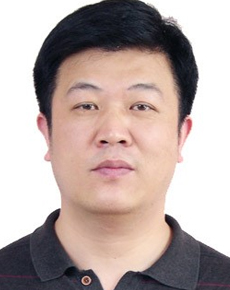
ProfessorHuazhong University of Science and Technology (HUST), Wuhan, ChinaChangjiang Professor appointed by the Ministry of Education of ChinaOwner of National Science Fund for Distinguished Young Scholars of China |
CAIHUA XIONG received his B.S., M.S. and Ph.D. degrees from Huazhong University of Science and Technology (HUST), Wuhan, China. He is the owner of the excellent Ph.D. Dissertation award in China. During the period from 1999 to 2003, he worked in the City University of Hong Kong and the Chinese University of Hong Kong as a Postdoctoral Fellow, and Worcester Polytechnic Institute, Worcester, MA, USA, as a Research Scientist. He is a professor (2003-present) in the School of Mechanical Science and Engineering, HUST. Now he is the Changjiang Professor appointed by the Ministry of Education of China, and the owner of National Science Fund for Distinguished Young Scholars of China.
His current research interests include rehabilitation robotics, wearable robot, kinesiology of musculoskeletal system, and human-mechatronic system.
He has published more than 80 papers in some international journals such as International Journal of Robotics Research, IEEE Transactions on Robotics, Proceedings of the Royal Society B-Biological Sciences, IEEE Transactions on Automation Science and Engineering, IEEE Transactions on Cybernetics, and IEEE/ASME Transactions on Mechatronics, and one book-Fundamentals of Robotic Grasping and Fixturing. He was authorized more than 30 invention patents related to rehabilitation robots and robotic prosthetic hands.
Research on Human-Mechatronic System and Equipment
How to design an artificial equipment so that its motion functions match the ones of the natural system, and forming a human-mechatronic system, is still a challenging. This presentation introduces a scientific design methodology for human-mechatronic equipment by applying the movement mechanisms of human extremity. The mechanically replicating method of the human movement is explored with an example of designing a robot hand. The movement mechanisms, including the movement synergic characteristics and the kinesiology of the musculoskeletal system of the human upper extremity, are studied. A design method of an anthropomorphic hand, which endows the designed hand with natural grasping functions, is developed. The experimental results show that the designed hand can replicate not only human grasping activities of daily living but also the natural grasping behaviors of the human hand. The design principle of the rehabilitation robot is formed from the exploration of replicating mechanically the natural grasping functions of the human hand. An exoskeleton rehabilitation robot for upper extremity is developed with the similar design idea of the anthropomorphic hand. Finally, a general framework of reproducing the configuration trajectory of arm-hand in spatiotemporal profile is proposed.